
Certification Skills Matrix
Show where your work
demonstrates professional
depth and breadth.
The matrix gives candidates and evaluators a common way to connect real work to the selected certification discipline.
How it works
Two axes describe the
work.
The horizontal axis identifies activities in the Communications Systems Development Lifecycle. The vertical axis identifies Workflow Journey Components involved in the work.
Candidates using the Work Example Portfolio identify intersections where their evidence demonstrates a working level of skill or higher. The matrix supports evaluation; it does not turn EDP, CCMP and CXMP into levels.
The complete framework
See the 17-by-19 matrix.
The intersections are intentionally blank. Candidates mark only the cells supported by their work-example evidence for the selected certification discipline.
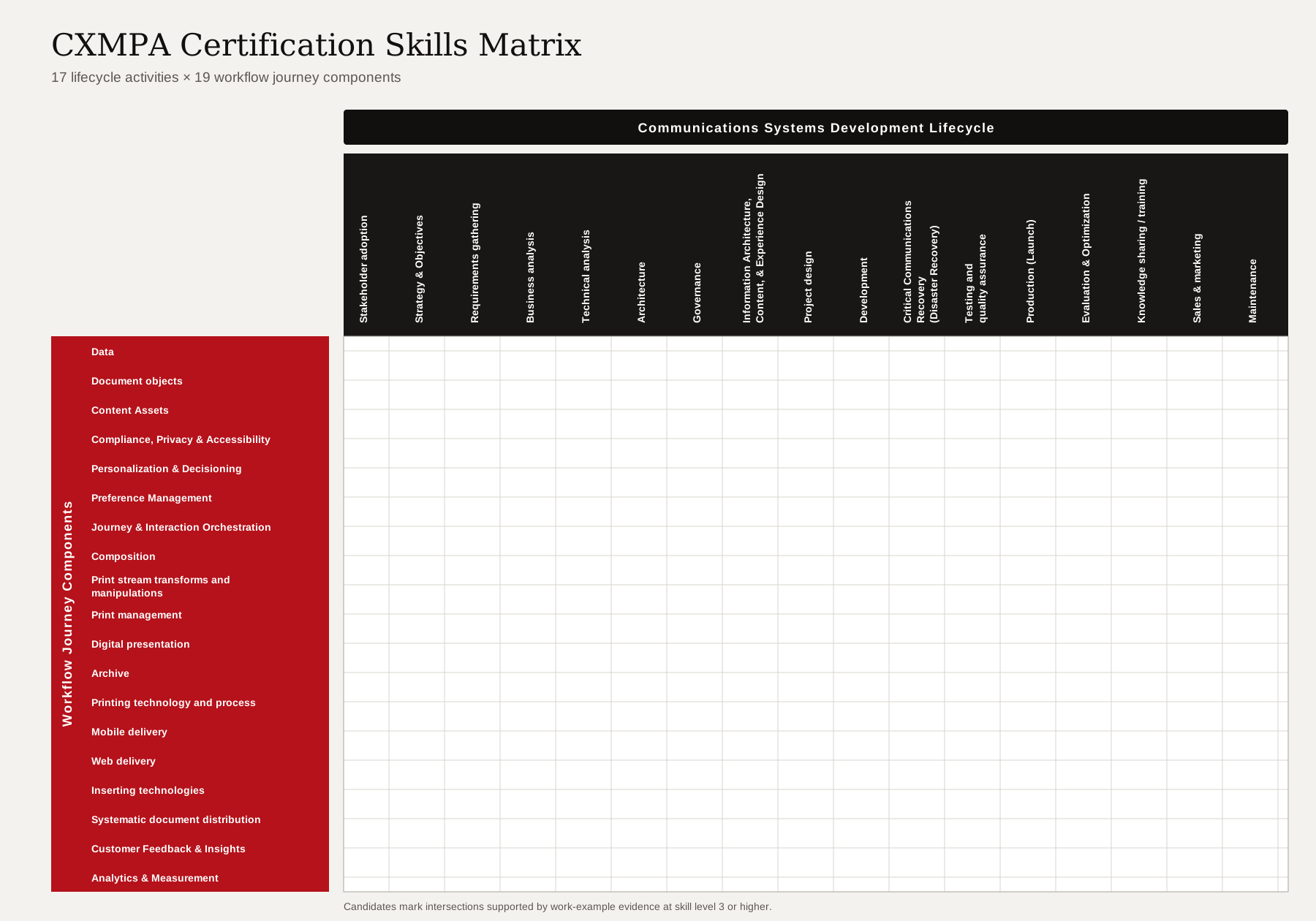
Horizontal axis
17 lifecycle activities
Vertical axis
19 journey components
Using the matrix
Relate each example to your selected discipline.
The same framework supports all three certifications. The responsibilities, judgment, contributions and outcomes shown in the work establish whether the evidence aligns to EDP, CCMP or CXMP.
1
Select the discipline
Choose the certification that most directly matches the professional work you can demonstrate.
2
Choose three examples
At least two examples must be based on work completed within the past five years.
3
Mark supported intersections
Identify where each example demonstrates working skill or knowledge, advanced skill or expert skill.
4
Explain your contribution
Describe your role, judgment, results and the evidence that supports the selected cells.
A shared framework
Different disciplines
can use the same
matrix.
01
Document systems, composition, production, output, delivery and archive.
02
Communication strategy, content, governance, personalization, channels and operations.
03
Experience design, journey orchestration, accessibility, feedback, analytics and improvement.